By Miranda Castro, FSHom, RSHom(NA), CCH
Homeopathic educator and practitioner with 45 years of experience
Some babies produce their teeth with barely a murmur while others make a big deal about it! Teething is a natural process, but “natural” does not necessarily mean painless and some babies suffer tremendously—with pain, inflamed gums, copious drooling, disturbed sleep, digestive upsets, rashes, fevers, coughs, colds, earaches, and dramatic changes in mood.
Parents know their babies. They are often the first to recognize the familiar cluster of symptoms that accompanies each new tooth. Yet their observations are sometimes dismissed or even laughed at by doctors who do not believe that teething can cause sickness or distress.
Babies cannot tell us where they hurt, how severely they hurt, or whether a pain is throbbing, burning, shooting, or simply unbearable. We have to observe them closely: their expressions, behavior, sleep, appetite, stools, temperature, gums, cheeks, and the particular things that make them feel better or worse.
Homeopathy offers an individualized and practical way to support babies and children through teething. The aim is not merely to name a complaint but to understand how each child experiences it. The differences guide us to specific remedies that match a child’s whole picture. Teething with homeopathy as a resource can help the process be more tolerable for everyone.
Throughout this article, there is more information hidden!
Click where you see a small black arrow (like the one below) for helpful graphics and more information.

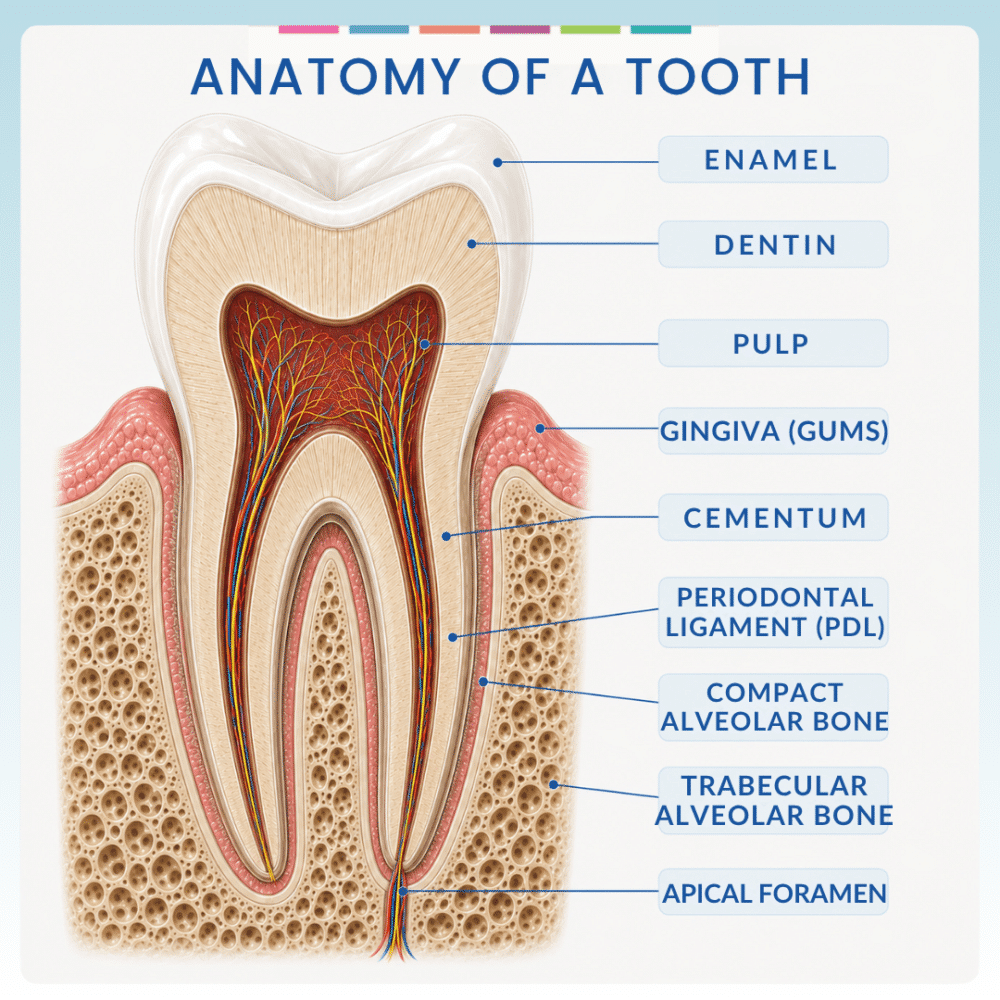
Teeth continue developing and moving through the jawbone after birth. They are not dead structures. Teeth contain and are supported by living tissues, including dentin, cementum, the periodontal membrane, ligaments, pulp, nerves, and a blood supply. Their formation and eruption are therefore dynamic physiological processes—and each child experiences them differently.
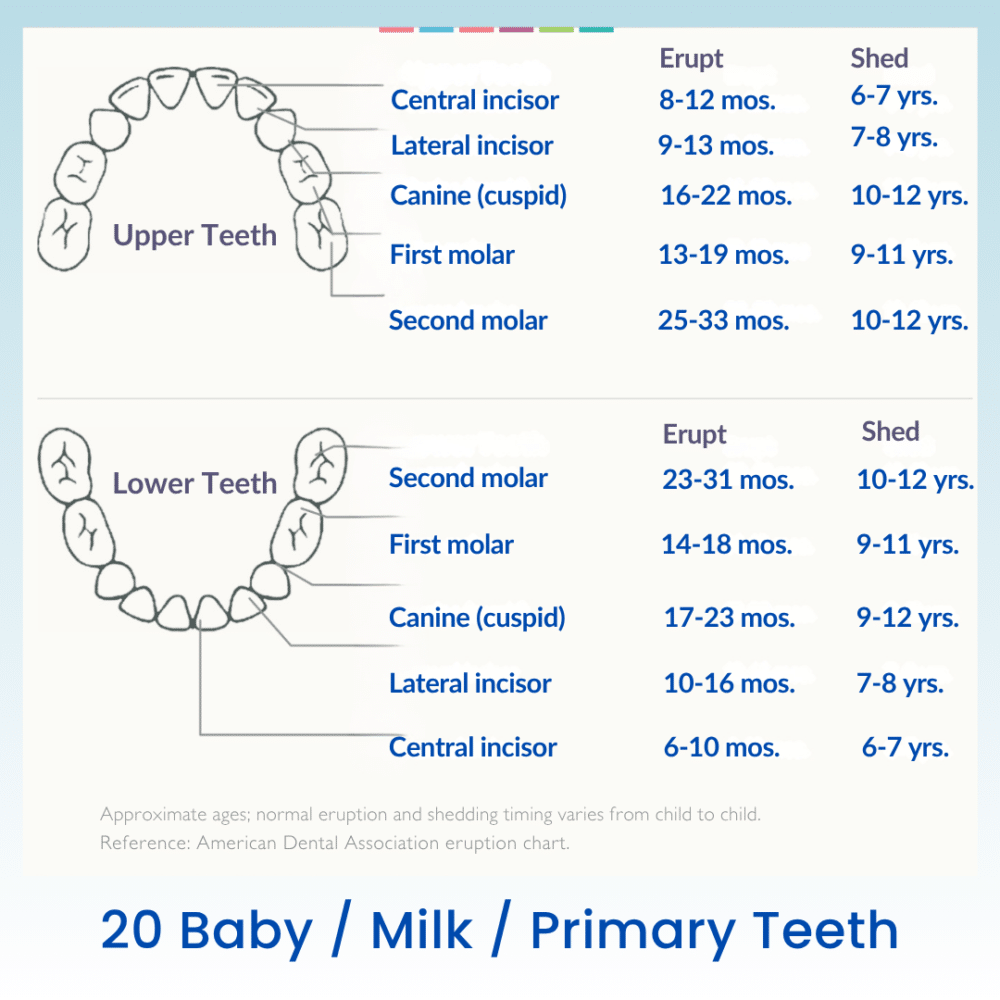
These ages are approximate. Eruption times vary enormously from one child to another. Girls may produce teeth somewhat earlier than boys, and both the pattern and starting time of teething appear to be influenced by heredity.
Early or late teething does not, in itself, tell us whether a child is healthy. Some robust children teethe late; some delicate children teethe early. The whole child always matters more than an arbitrary timetable.
Some children teethe without difficulty. Others suffer mildly, moderately, or tremendously. General symptoms parents may observe include pain (from mild fussing to severe pain with distress), drooling, chewing/biting on fingers/fists/toys or refusing to chew because of tender, swollen gums, restlessness, disturbed sleep, red cheeks or red patches on cheeks, clinginess and/or irritability.
Teething children can get sick with a fever, a cold, cough or earache, diarrhea, diaper (nappy) rash, rashes around the mouth and chin.
Childbirth is natural; growing pains are natural; menstruation is natural. Natural processes can still be painful and cause distress. At the same time, we shouldn’t assume that symptoms occurring during teething are caused by teething.
Parents should trust their instincts. If something does not feel right, have the child examined.
Try popping one of these in the refrigerator:
Do not put a teething ring or metal spoon in the freezer. Extreme cold can hurt delicate gums and skin, and a frozen liquid-filled ring may become damaged or leak.
Some parents use a large chilled carrot, celery stalk, firm piece of bread, bagel, or homemade teething biscuit. These require particular care. A baby must be securely seated and watched continuously, as pieces can be bitten or gummed off and become choking hazards. Never leave a baby alone with anything edible.
Teething biscuits can be made from thick “fingers” of bread baked slowly until very hard. Again, they must be used only under supervision.
Avoid sedating a baby for ordinary teething discomfort.
Do not use products containing benzocaine, such as certain topical numbing gels, without professional medical guidance. Serious adverse effects, although rare, have been reported in infants.
I also advise against routine use of gripe water. These products can be high in sugar or artificial sweeteners and may contain sodium bicarbonate—and some formulations have historically contained alcohol.
Chamomile tea can help some babies, but more is not always better. Sensitive children given large quantities may begin to develop symptoms associated with the substance or find that existing symptoms become worse. Use it only when needed and only if it is clearly helping.
I do not recommend giving chamomile tea at the same time as homeopathic Chamomilla in potency, as the two may interfere with each other and produce an aggravation.
Homeopathic treatment may be used to ease teething pain and alleviate accompanying symptoms. It is brilliant for reluctant or delayed teeth eruptions and supporting weak or poorly formed teeth.
In the process, homeopathy can strengthen the child’s general health and well-being.
The prescription is based on the whole picture. Pain, drooling, swollen gums, sleeplessness, and wanting to be carried are common symptoms. They help us identify a general group of remedies but do not necessarily distinguish one remedy from another.
Is the child better or worse from warmth?
These individualizing symptoms allow us to select the remedy with the best chance of helping.

Depending on the urgency of the symptoms, a low-potency remedy may be repeated for approximately six to 10 doses.
Most homeopathic remedies come as pellets or granules. A few pellets can be dissolved in a cup of water and administered a teaspoon at a time. One teaspoon is one dose.
As soon as improvement begins, reduce the frequency. Stop when the symptoms have abated significantly. Repeat later only if needed.
– Do not continue repeating a remedy that is not helping—or is helping only slightly without producing meaningful improvement.
– Higher potencies such as 30C and 200C should not be repeated as casually. If three to six doses have produced no response, reconsider the remedy or consult an experienced homeopathic practitioner.
– If a child is unwell, feverish, lethargic, or displaying symptoms that concern you, consult the child’s primary healthcare practitioner for a diagnosis. Make sure that nothing serious is being overlooked.
– If you are confused about the remedy picture or the selected remedy does not work, seek professional homeopathic help. A local practitioner is ideal when one is available, although many experienced homeopaths also offer distance consultations.
Click each remedy for more information on symptoms!
This video contains helpful insights on Chamomilla and Pulsatilla! These remedies are central to acute, painful teething, but their emotional and physical pictures differ.
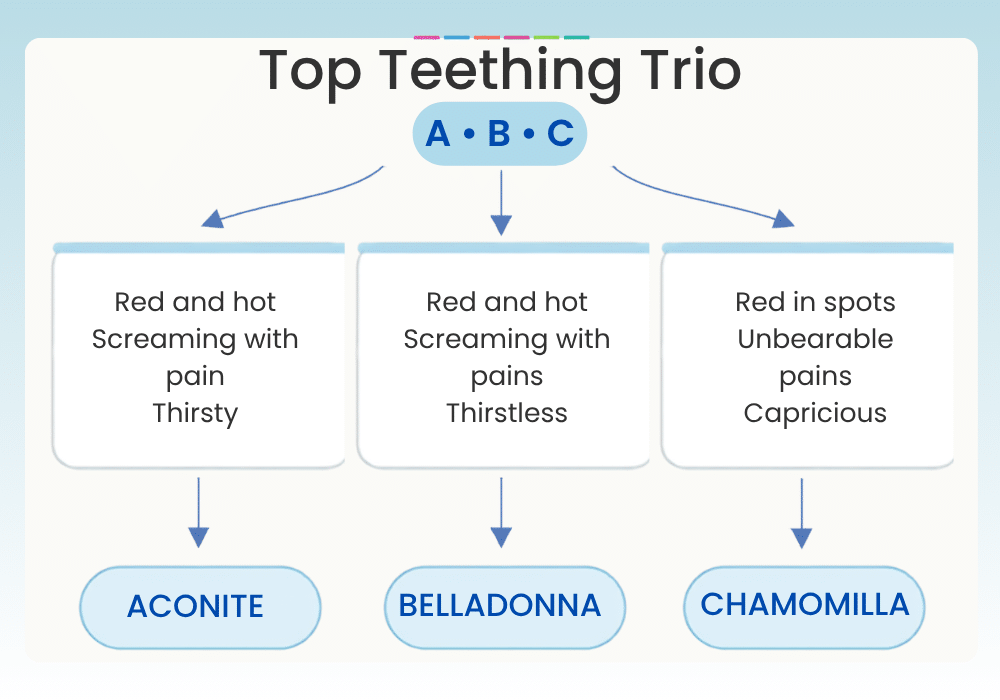
Helios ABC Pillules contain all 3 remedies in this trio! and can be helpful when you aren’t sure which fits best.
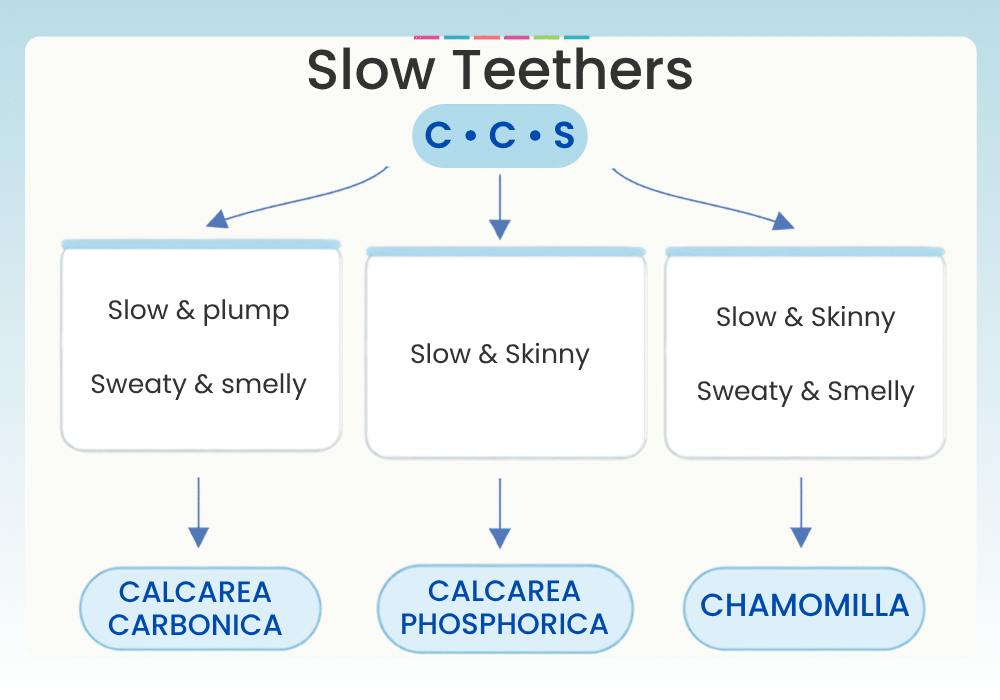
These three remedies overlap considerably and are important when teething is slow, late, difficult, or associated with weak teeth.
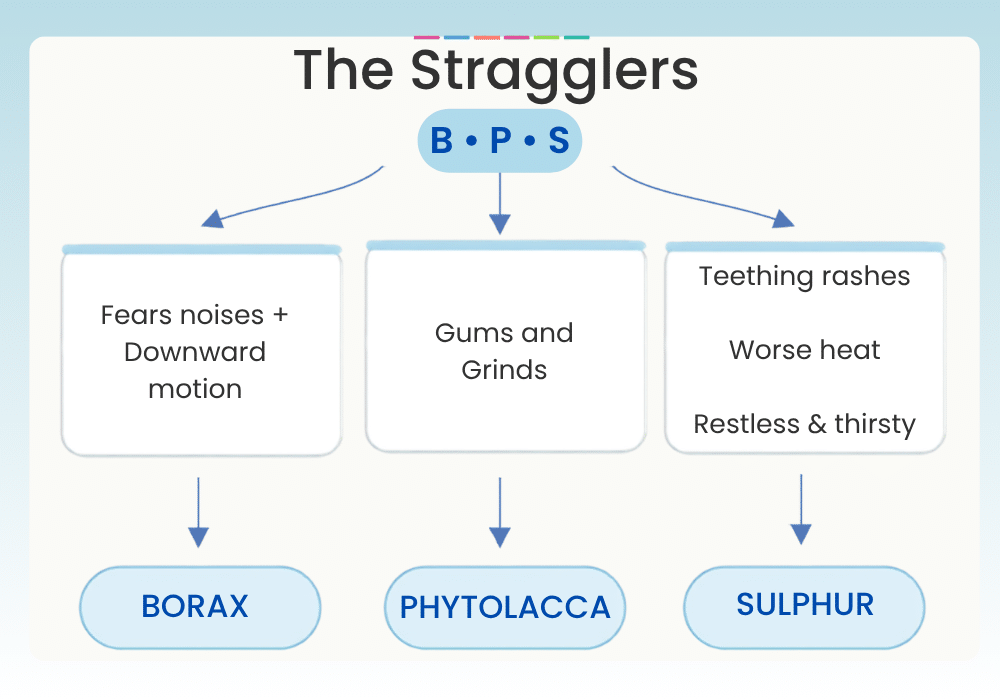
A baby or child with eczema or another chronic skin condition should be treated by an experienced homeopathic practitioner rather than managed only with acute remedies.
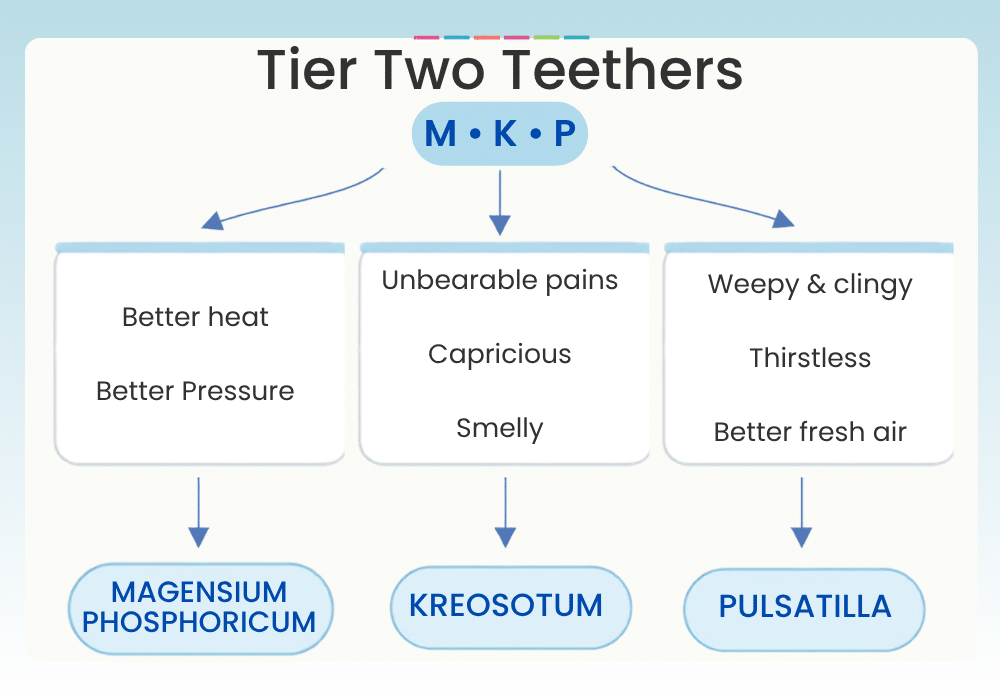
Other remedies may be helpful in more particular symptom pictures:
Having a quality kit on hand can make all the difference in late-night caregiving. Being prepared can also make your life a lot easier in the moment!
My Complete 30c Kit and Handbook is the perfect bundle to prepare young families – and everyone!
Every homeopathic remedy mentioned in this article is included.

As with a single remedy, do not keep administering a combination that is not helping.
The point is not to give every possible remedy and hope that one works. A combination should still have a clear rationale.
The second four permanent molars usually emerge at around 12 or 13, although they sometimes appear as early as 11.
Permanent teeth often cause less trouble than milk teeth, but not always. A child may develop apparently uncharacteristic headaches or other discomfort while a permanent tooth is erupting or struggling to erupt.
I prescribe for the whole symptom picture, paying particular attention to modalities—the factors that make the child better or worse. I consider the familiar teething remedies first. When I have treated a child since babyhood, I also look back at the case history to see which remedies helped during the first round of teething.
Weak or decayed baby teeth do not automatically mean the permanent teeth will also be weak. The child’s health, nutrition, oral care, and constitutional treatment can all change over time.

Wisdom teeth may:
When a wisdom tooth is slow to erupt but has room to do so, remedies such as Calcarea carbonica, Calcarea phosphorica, or Silica may be considered according to the whole picture.
For pain, choose among the teething remedies according to the individual symptoms.
Some angled or partially impacted teeth can gradually change position. When a tooth is not causing trouble, it may be reasonable to give it time while having it appropriately monitored.
Staphysagria is my leading remedy for a child who is miserable and resentful after having braces fitted or adjusted, especially when there is pain in the teeth or jaw.
For straightforward physical pain:
For sore or inflamed gums, consider Calendula alternating with Hepar sulph, and stop the preceding pain remedies while using these.


Get Enough Vitamin D
Vitamin D is essential for calcium absorption. Sunlight, fortified foods, and supplements can help.
✔️
Spread Calcium Intake Throughout the Day
The body absorbs calcium more efficiently in smaller amounts (≤500 mg at a time).
✔️
Include Calcium-Rich Foods
Dairy, leafy greens (like kale, bok choy), almonds, tofu, and fortified plant milks are great sources.
✔️
Watch Your Fiber and Phytate Intake
High-fiber foods (like bran) and phytates (in beans, whole grains) can bind calcium and reduce absorption. Don’t overdo these in the same meal.
✔️
Limit High-Oxalate Foods
Spinach, rhubarb, and beet greens are high in oxalates, which bind calcium and lower its absorption.
✔️
Pair with Protein (but Not Excess)
Moderate protein intake can help calcium absorption, but very high protein can increase calcium loss in urine.
✔️
Avoid Excess Sodium
Too much salt increases calcium loss through urine.
✔️
Moderate Caffeine Intake
Excessive caffeine can slightly increase calcium loss, but moderate intake is generally fine if your calcium is adequate.
✔️
Get Enough Magnesium
Magnesium is needed for vitamin D activation and parathyroid hormone function, both of which help calcium absorption.
✔️
Be Mindful of Certain Medications
Some medicines (like corticosteroids, proton-pump inhibitors) can reduce calcium absorption; check with your doctor if you’re on long-term meds.
✔️
Believing All Calcium Sources Are Equal
Not all calcium in food is equally absorbable (e.g., calcium in spinach is poorly absorbed compared to dairy or bok choy).
✔️
Assuming Supplements Work as Well as Food
Food sources of calcium are often better absorbed and less likely to cause side effects than supplements.
✔️
Ignoring the Role of Vitamin D
Many think calcium alone is enough, but without vitamin D, much of it won’t be absorbed.
✔️
Thinking “More is Better”
The body can only absorb a limited amount of calcium at one time; excess can cause kidney stones and other issues.
✔️
Overlooking Interactions with Other Nutrients
High intakes of iron, zinc, or magnesium can compete with calcium for absorption if taken together.
✔️
Not Realizing That Age and Life Stage Matter
Children, teens, pregnant women, and the elderly have different calcium needs and absorption rates.
✔️
Assuming Plant-Based Diets Always Provide Enough
Some plant foods contain compounds (like oxalates/phytates) that hinder calcium absorption.
✔️
Thinking All Dairy Is High in Calcium
Some dairy products (like cream cheese or butter) are low in calcium.
✔️
Not Recognizing the Impact of Lifestyle Choices
Smoking, inactivity, and heavy alcohol use reduce calcium absorption and bone health.
✔️
Neglecting Gut Health
Digestive disorders (like celiac, Crohn’s) can impair absorption, but many don’t make the connection.
✔️
Supplementation should be individualized. Quality, digestibility, and assimilation matter as much as the name on the bottle.
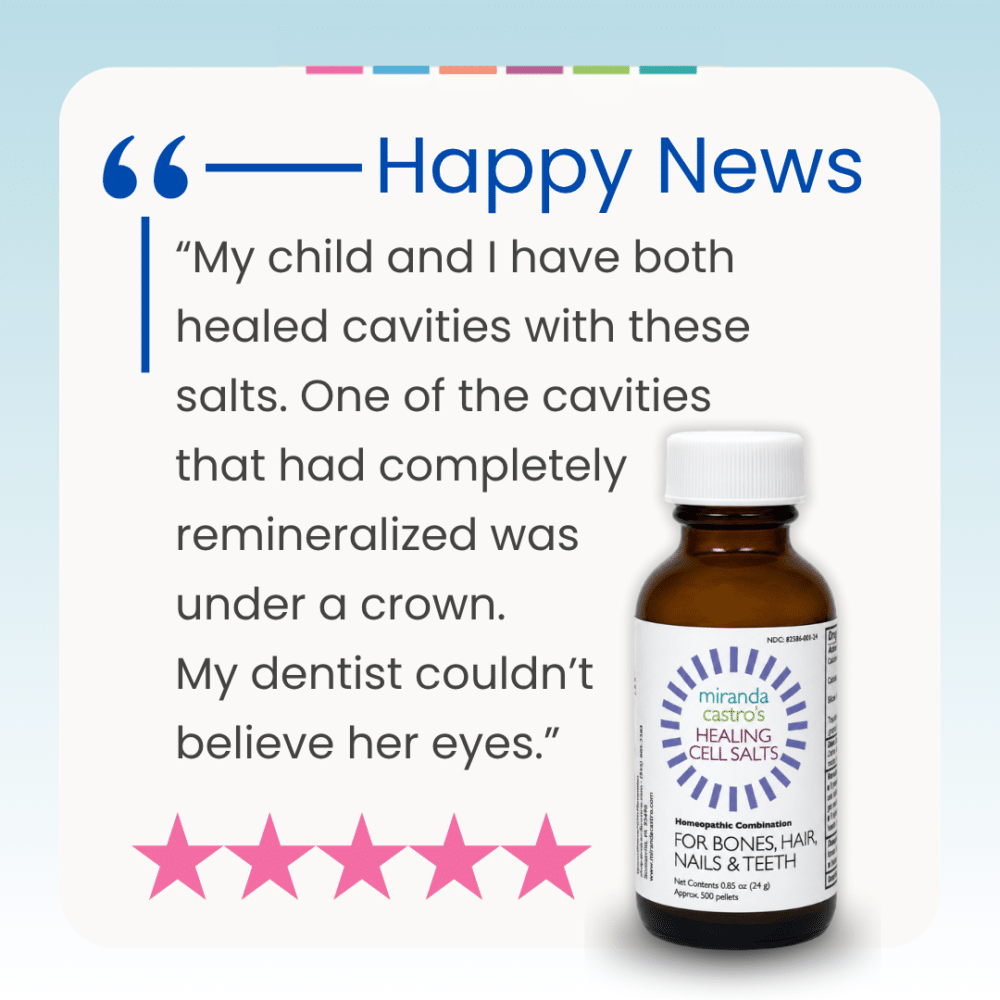
These tissue salts have a synergistic relationship and are used in low potencies for their ability to strengthen tissues at a cellular level.
Calcarea fluorica is particularly valuable for:
Some medications may also affect dental health, including certain antibiotics taken by the child or by the mother during pregnancy.
Healthy eating habits need to be encouraged—and modeled. Children notice what adults eat, how we snack, and whether we treat sweets as rewards.
Helpful family habits include:
Sugar appears in many foods that do not seem particularly sweet. Teach children to look at the “carbohydrates, of which sugars” section of a food label.
As a quick guide:
Becoming an avid label reader can transform a family’s understanding of how much hidden sugar they are consuming.
Young children often swallow toothpaste, making it difficult to know exactly how much fluoride they are receiving. Toothpaste, drinking water, food, beverages, and dental treatments can add up—particularly in small children.
The central issue is not simply whether fluoride is present, but how much fluoride an individual child receives from all sources. Families need to consider their local water supply, the products they use, the child’s age, and the likelihood of toothpaste being swallowed.
Parents who are concerned can investigate the fluoride content of their household water and make informed decisions based on the child’s total exposure.
Teething is not one uniform experience. It is a developmental process expressed through the individuality of each child.
One baby is hot, red, thirsty, and frightened. Another is hot, red, dry, and furious. One demands to be carried and then rejects every attempt at comfort. Another is clingy, weepy, thirstless, and transformed by a walk in the fresh air. One needs to bite down hard; another cannot bear the slightest touch against the gums.
These differences matter.
Homeopathy asks us to pay attention—not only to the tooth but to the child producing it. We observe the pain, mood, temperature, thirst, sleep, stools, skin, appetite, and modalities. We listen to the parents. We notice what is unusual. Then we choose the remedy that most closely resembles the complete picture.
Parents should not be mocked or dismissed when they say their baby is suffering. Their observations are central to understanding a child who cannot yet speak.
At the same time, careful home prescribing includes knowing when to stop, when to change course, when to consult an experienced homeopath, and when a child needs medical or dental assessment.
Teething may be natural, but every child deserves to be heard, comforted, and treated as an individual.
Acute Care Homeopathy: same day support for any/all acute complaints.
Swift Homeopathy Acute Care Clinic offers affordable help for those needing homeopathic advice for urgent complaints. They are available 24 hours a day, 7 days a week, 365 days a year. Worldwide.
Homeopathy Help Now have a brilliant team of homeopaths (with various levels of experience and training) offering classical homeopathic treatment. They also offer a sliding scale (students of their Academy working under supervision). You will have to fill out a form at their website, and they will select a practitioner based on your needs and including any special requests.
Check out the latest articles or select a category below.